
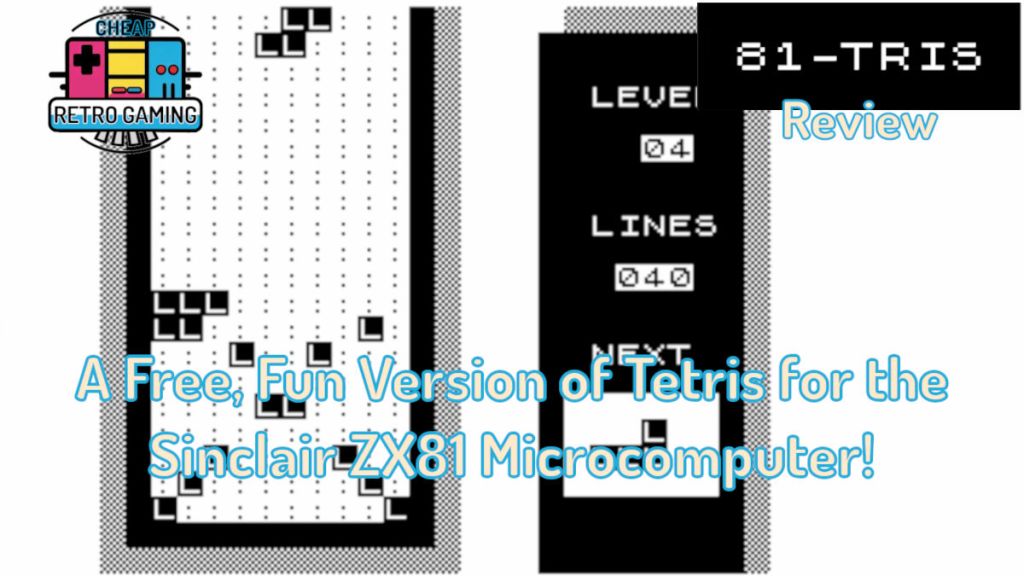
If there’s any famous puzzle game in video games, it has to be Tetris! The title has been released on a myriad of systems and consoles over the decades and continues to be ported by fans to this day. The most recent version that I’ve played is 81-TRIS, which is a port of the classic to the Sinclair ZX81 (Wikipedia). For those who don’t know, it was a microcomputer well known in the UK as the predecessor to the very popular Sinclair ZX Spectrum. If you want to know more about it, please check the Wikipedia link.
Options and Modes
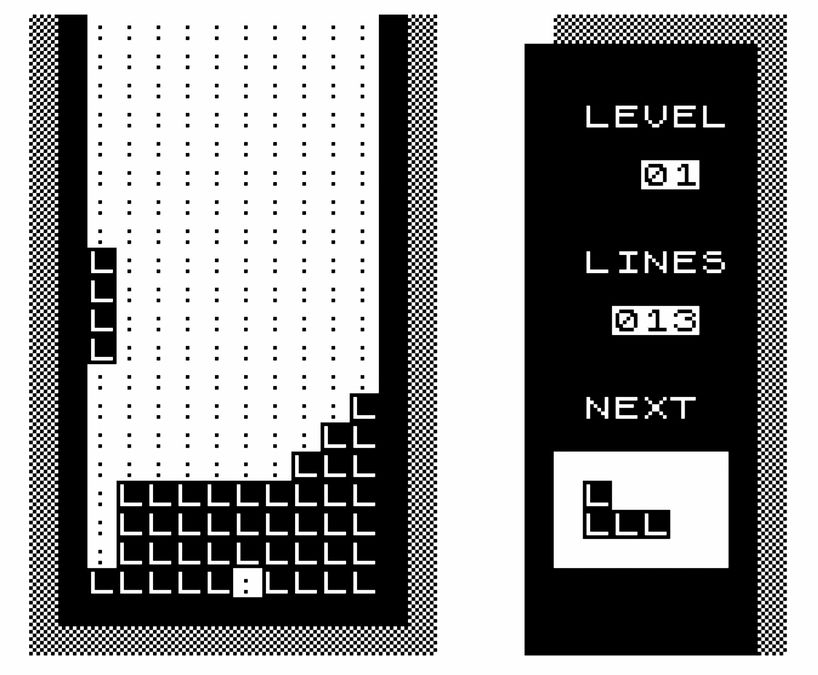
Upon starting the game, one thing I quickly appreciated were the various options offered. These included changing the default keyboard commands and also playing the game in two different game modes. One was a traditional game of Tetris, with another being an arcade mode where you have to clear obstacles in the stage that are preset before you start dropping pieces.
In the standard game mode, you’re able to choose your starting difficulty and then just try and complete as many lines as possible with the pieces you’re given. While doing so, you move them left or right, rotate them, or drop them down as appropriate.
Graphics
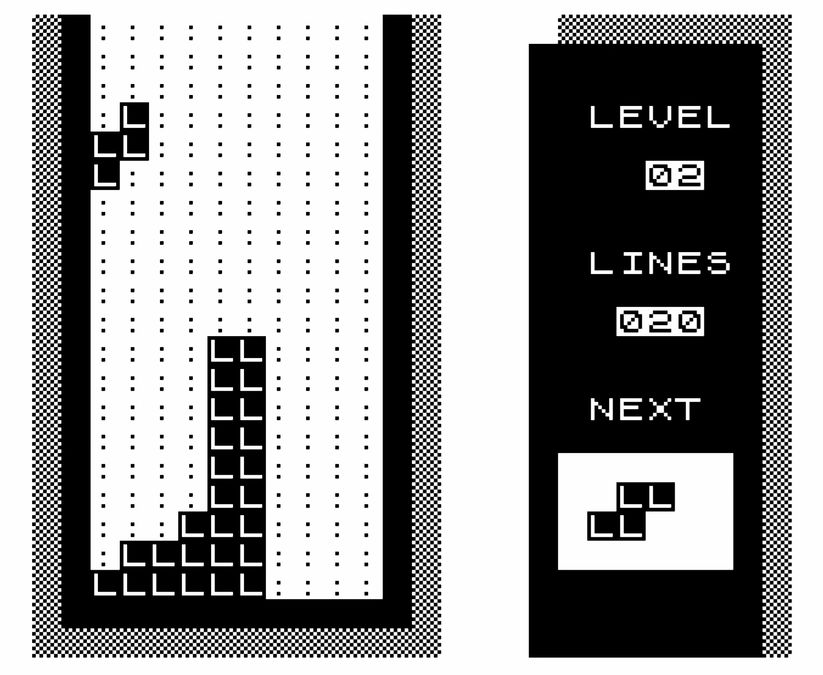
Since this is designed to run on an early microcomputer, the graphics are not impressive in any way. At least they are functional and work well enough. Although, one thing I liked was that the pieces have lines on them that helped me distinguish between some similar-looking blocks. This was important for those shaped like L’s or z’s.
Control
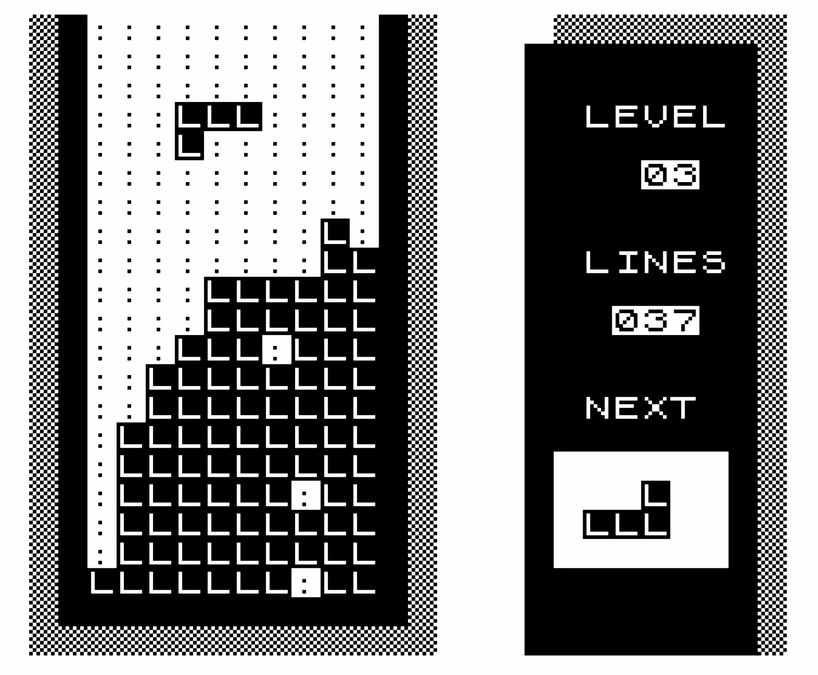
Another consequence of this being developed for an early microcomputer is that it was designed to be played with a keyboard. Now, I was ready to accept this, but it should be stated that inputs that we may take for granted today did not exist on the ZX81. These include arrow keys, ALT, and CTRL, all of which were widely used in PC gaming in the early 1990’s. In contrast to that, users of the ZX81 would have used keys like “O” and “P” to move left and right, and others, to interact with their games. Meanwhile, “M” is used to rotate your blocks, “A” drops them, and if you need to pause the game, “H” does that.
Of course, I expect such key binds will be odd choices for many players today. Thankfully, the game includes the aforementioned remapping option. However, to be upfront with you all, I used JoyToKey to play the game with a controller for much of my playtime. I am not the biggest fan of using only a keyboard for gameplay inputs.
Whether you play the game with a keyboard or otherwise, there is one irritating aspect about the control. That being the slight delay after you press a keyboard key before your change is indicated on the screen. This is probably related to the antiquated hardware of the ZX81. For this reason, I don’t think 81-TRIS is an appropriate choice for serious players of the game. The inherent delay would probably aggravate them too much. On the other hand, I expect that casual players could have a good time with it. I fall into this latter camp.
Gameplay
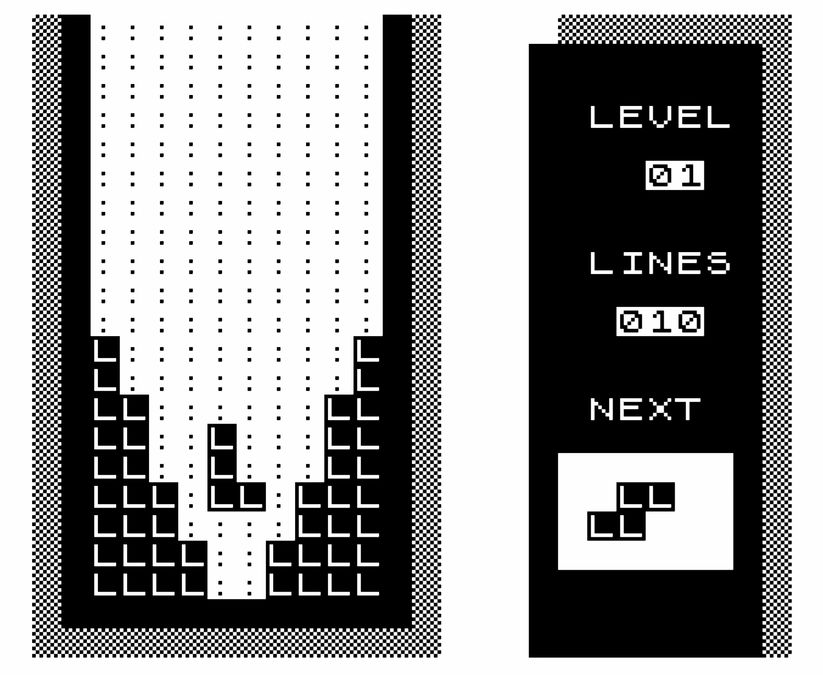
Despite the game’s primitive look, it still features that classic Tetris gameplay and is as addictive as I remember playing it as a kid. However, it’s worth pointing out that the ZX81 had no sound hardware, so 81-TRIS was designed to be played in silence. The only thing I could hear were the sounds of my key presses or using the controller. Even so, I was impressed at just how fun the game was while I played it. I even had to force myself to stop so I could work on this review!
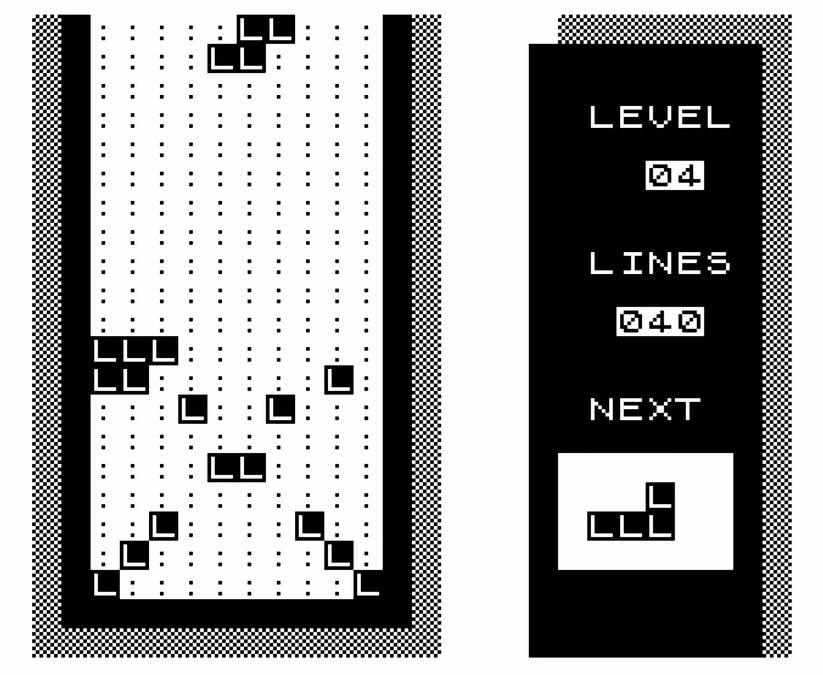
One of the best additions is the arcade mode. As I mentioned before, it is distinct from the normal mode in that it has preplaced obstacles on the playfield before you begin dropping any of your pieces. You need to take these into account as you seek to complete the stage. For example, one level has two blocks that are pointed straight up for about eight rows like a big pole sticking up from the ground. Another has the blocks shaped like a pit. You need to fill in the gaps to be able to make the 10 lines necessary to complete the stage. As I played, determining an appropriate way to clear the blocks in this mode was a lot of fun! So much so, that while I was grabbing screenshots for this review, seeing the game in motion made me want to play it more!
Final Thoughts
In conclusion, there’s only two issues that I have with 81-TRIS. One is that there’s no music or sound effects in the game. Obviously, this can’t be helped. As I previously stated, the ZX81 had no sound hardware. Because of this, I won’t lower my rating of the title due to its silence.
On the other hand, the singular issue I have with it is the input delay when you press buttons. I noticed this while using both the keyboard and controller. Although I can’t say for sure, I suspect that it is related to the system’s old hardware. From that perspective, it’s understandable that there would be a bit of delay in the game’s processing of inputs.
Because of that problem, I was ready to give 81-TRIS a Positive rating overall.
Yet, as I thought of the title more, I grew to be impressed by its design to a greater extent. The developer did a great job of allowing for remappable keyboard commands. Moreover, the difficulty settings and second game mode are welcome additions as well.
Due to those reasons, and the fact that this is a competent, well-done version of Tetris that remains addictive despite its old hardware, I feel compelled to give 81-TRIS a Very Positive rating!
It’s available for free on Itch.io and also playable in a web browser. I learned of it as part of a bundle on that storefront, so I’m including the price I “paid” for it down below.
Review Overview

Summary: A quality version of Tetris designed to run on on the Sinclair ZX81 microcomputer. Despite no sound and some input delay, it’s still fun to play with its multiple options and addictive gameplay!
Title: 81-TRIS (Webpage)
Genre: Puzzle
Year Released: 2023
Developer: Salvacam (Gitlab Page, Spanish)
Available On: Sinclair ZX81 on itch.io or gitlab.io. It’s also playable in a web browser.
Price Paid: $0.06 for the game, of $5.45 for a bundle. However, be aware that the game is actually free.
Remember, we can have different opinions about the games we play. If you like something more (or less) than I do, both of our perspectives are valid. Please see my Review Rating Scale to know more of how I rate games.
 Cheap Retro Gaming
Leave a comment