

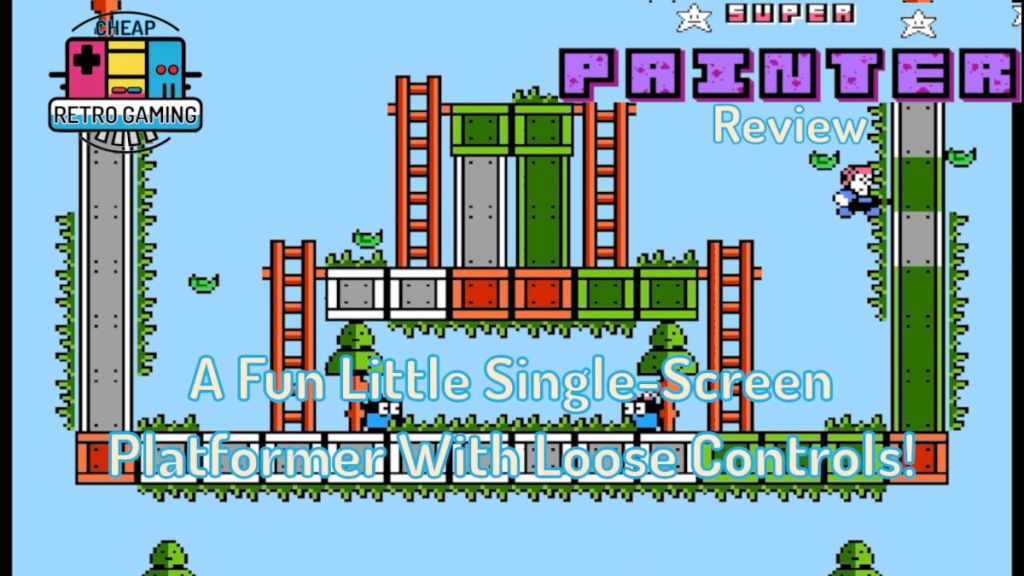
Early Platformer games were single-screen affairs where you controlled a character around the stage. These often involved trying to reach a certain destination or achieving an objective. While they are not the most popular titles today, I’ve grown to be fond of them. One game that seems to take inspiration from such titles is Super Painter, a NES game that is included on the Mega Cat Collection 1 for the Evercade.
Gameplay and Control
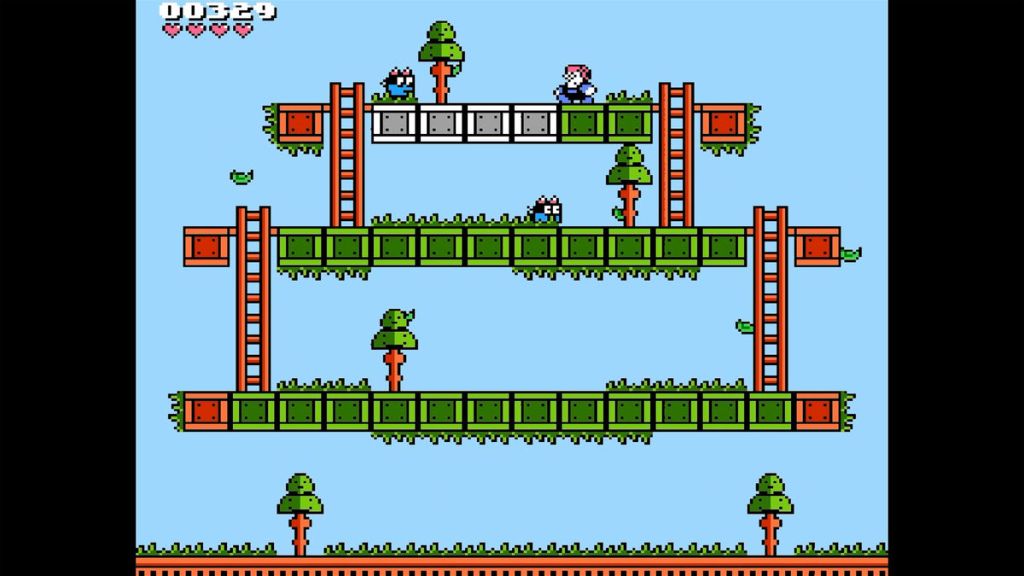
In it, your goal is to paint all the squares on the level before continuing on to the next. As one would expect, you move your little guy to the left and right across the screen as he changes the color of each square. This is done simply by touching them. No extra button presses are needed to do the painting.
Much of the level design involves going up and down ladders to reach other platforms. Jumping over enemies, or gaps in the level, is often required to achieve your goal as well. You earn extra points for each square you paint, and also for making it to the end of the level.
If you touch an enemy, you lose a life and have to restart the stage over again. The game gives you about five lives until it’s game over. However, you can continue an unlimited number of times. There are no passwords in the game, and it took me a little over an hour to complete. I used the Evercade’s save state feature to save my progress. There are 25 stages in total.
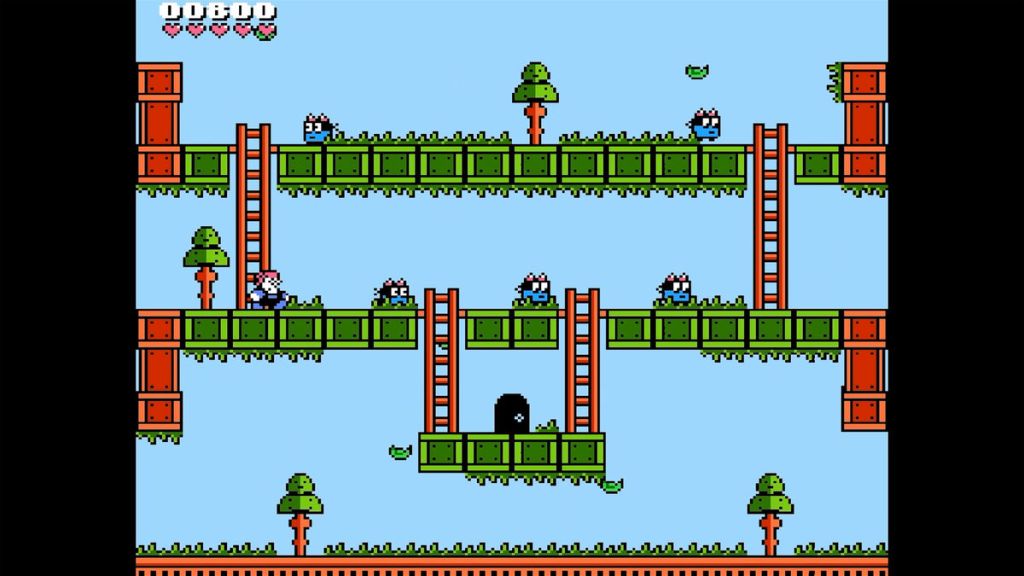
Unfortunately, one of the things that hampered my enjoyment was the control. Specifically, the degree of input delay between pressing the button and jumping. The consequence of this was having to intentionally press the jump button earlier than I would normally do in a game like this.
It was so bad, that I’d even say that Super Painter has the worst input delay I’ve seen on the Evercade thus far. Because of that, I feel compelled to mention it here. Although, too be fair, I don’t know if it’s because of the Evercade emulation, or due to the engine in which the game was made.
Whatever the reason may be, I know the delay cost me multiple lives as I played the game. Moreover, although jumping over enemies is a common occurrence in single-screen Platformers, in this one, I was routinely anxious about making such jumps. Especially if I had to jump over an enemy.
On a related note, all the face buttons on the controller defaulted to making your character jump repeatedly if you held down the button. I wish one of the buttons didn’t have turbo-fire built in. Sometimes I wanted to intentionally not jump, and to do that, I had to let go of all of them. I know if sounds like a small thing, and it is, but I found it a little bit irritating.
Yet, it’s not all bad.
One aspect that made Super Painter stand out was that many of the levels are designed around falling off the side of the screen to land on a platform above you. The way this works is that many stages don’t have a floor, so you can repeatedly fall on the side of the screen until you move your D-pad to the left or right to land on a platform near the top of the screen. Oftentimes, you wouldn’t be able to reach these in any other way. In the second half of the game, this strategy was required to complete many stages. I thought it was funny, and an interesting mechanic that made it feel a bit different from other Platformers.
Although the control was a pain at times, I eventually became used to the input delay and grew to tolerate it. It was made up for by interesting level designs and a gameplay loop that wasn’t too punishing.
Graphics
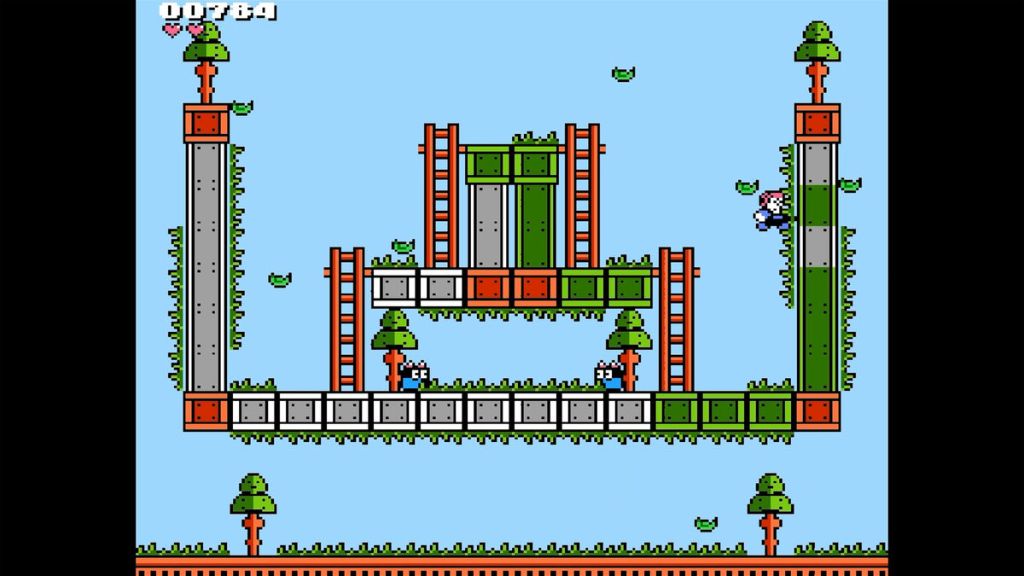
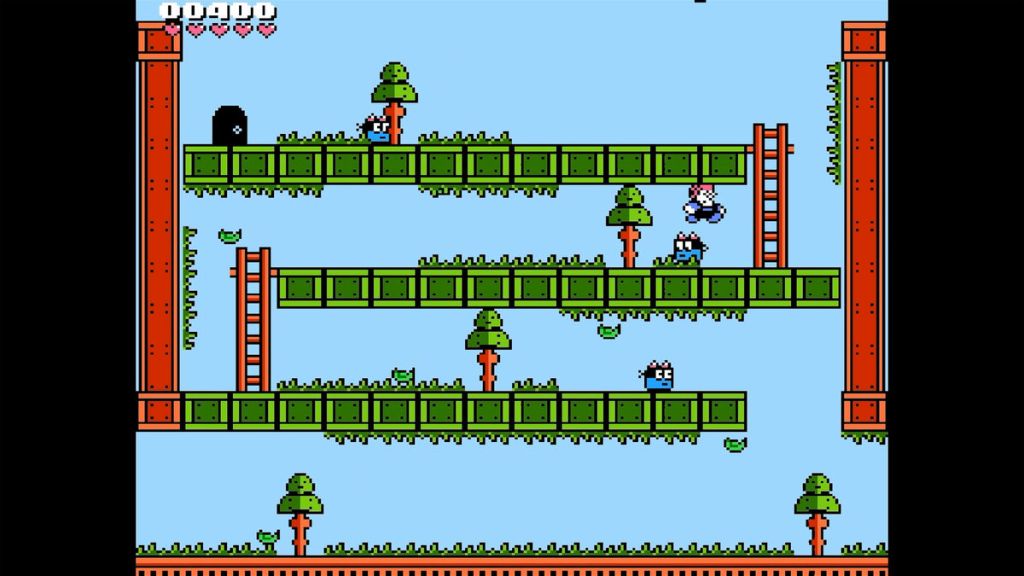
Another area of Super Painter that I enjoyed were the graphics. They look simple, but I still enjoyed the appearance of them and their style. It felt like an early NES style in both gameplay, and graphics, but with some minor flourishes. In the case of my term “flourishes,” what I mean are the little objects that float around the screen at times. These include leaves and snowflakes that are present depending on the stage.
As I just alluded to, there’s different areas that you visit in the game. These few biomes help the graphics be a bit more fresh than they would be otherwise. It was surprising that these didn’t make any impact on how your character controls, though. Perhaps this was done as an intentional choice by the developers to limit player frustration in the frozen stages.
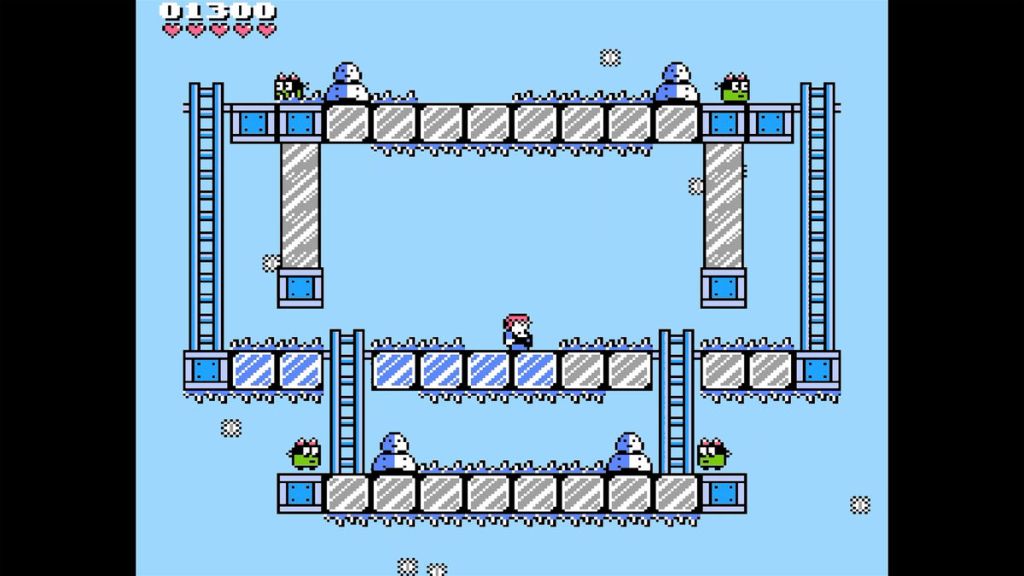
Finally, the enemies are kind of cute and I didn’t notice any violent aspect to the title’s art design. Nor is the title too challenging. Thus, making it a kid-friendly title.
Music and Sound Effects
I found the music to be pretty enjoyable and liked listening to it. I never considered turning it off either, so it added a good deal to the game. However, I don’t remember much from the sound effects. So, they didn’t do much for me.
Final Thoughts
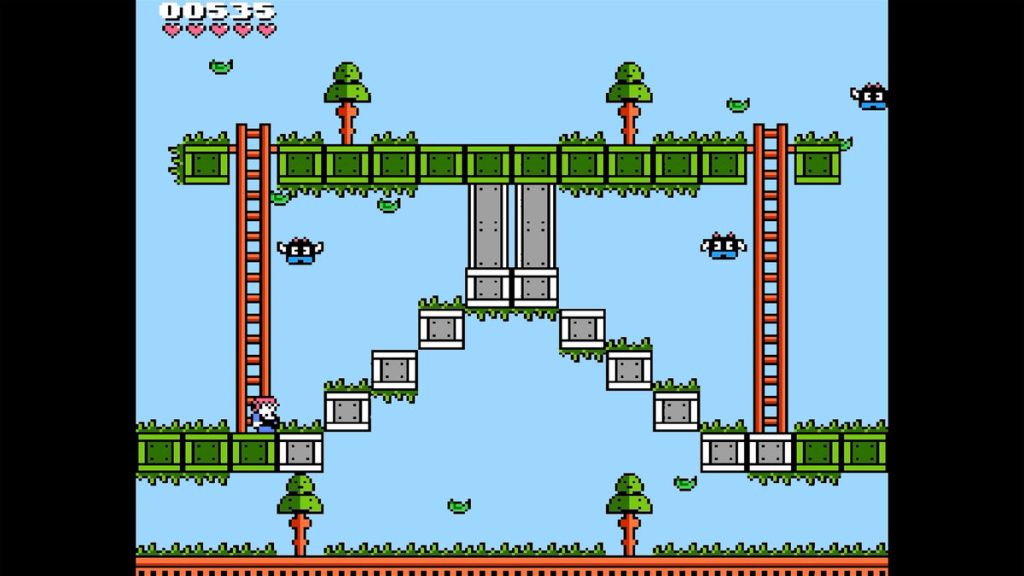
As I reflect on Super Painter, I think of it as a nice little game. Its scope is really defined as just a small single-screen Platformer. Outside of the mechanic of falling down to reach higher areas of the level, nothing stands out about it as being original. That’s OK though, not every title out there has to be super innovative.
Still, I thought it was a fun romp and even though the control was quite delayed, I was able to get used to that aspect and work around it. Plus, the music was quite good, and when I was capturing footage for this review, I played it longer than expected. As such, I can say that the game has an addictive element to it. I had a good time with it and think it deserves a Positive rating.
It’s free on Retro Souls’ website. A link to the company’s NES/Famicom games has it and Multidude available for download.
Review Overview

Summary: While not very diverse in its gameplay mechanics, Super Painter’s design has a bit of innovation along with good music. It’s pretty fun, but the controls have a lot of input delay to them.
Title: Super Painter (Mega Cat Studios Webpage)
Genre: Single-screen Platformer
Year Released: 2014
Developer: Retro Souls (Website)
Available On: NES and Evercade through Mega Cat Studios Collection 1
Price Paid: $2.51 or $25.18 for the collection
Remember, we can have different opinions about the games we play. If you like something more (or less) than I do, both of our perspectives are valid. Please see my Review Rating Scale to know more of how I rate games.
 Cheap Retro Gaming
Leave a comment